INQUIRY
English
English Chinese Simplified Chinese Traditional French German Portuguese Spanish Russian Japanese Korean Arabic Irish Greek Turkish Italian Danish Romanian Indonesian Czech Afrikaans Swedish Polish Basque Catalan Esperanto Hindi Lao Albanian Amharic Armenian Azerbaijani Belarusian Bengali Bosnian Bulgarian Cebuano Chichewa Corsican Croatian Dutch Estonian Filipino Finnish Frisian Galician Georgian Gujarati Haitian Hausa Hawaiian Hebrew Hmong Hungarian Icelandic Igbo Javanese Kannada Kazakh Khmer Kurdish Kyrgyz Latin Latvian Lithuanian Luxembou.. Macedonian Malagasy Malay Malayalam Maltese Maori Marathi Mongolian Burmese Nepali Norwegian Pashto Persian Punjabi Serbian Sesotho Sinhala Slovak Slovenian Somali Samoan Scots Gaelic Shona Sindhi Sundanese Swahili Tajik Tamil Telugu Thai Ukrainian Urdu Uzbek Vietnamese Welsh Xhosa Yiddish Yoruba Zulu Kinyarwanda Tatar Oriya Turkmen Uyghur Abkhaz Acehnese Acholi Alur Assamese Awadish Aymara Balinese Bambara Bashkir Batak Karo Bataximau Longong Batak Toba Pemba Betawi Bhojpuri Bicol Breton Buryat Cantonese Chuvash Crimean Tatar Sewing Divi Dogra Doumbe Dzongkha Ewe Fijian Fula Ga Ganda (Luganda) Guarani Hakachin Hiligaynon Hunsrück Iloko Pampanga Kiga Kituba Konkani Kryo Kurdish (Sorani) Latgale Ligurian Limburgish Lingala Lombard Luo Maithili Makassar Malay (Jawi) Steppe Mari Meitei (Manipuri) Minan Mizo Ndebele (Southern) Nepali (Newari) Northern Sotho (Sepéti) Nuer Occitan Oromo Pangasinan Papiamento Punjabi (Shamuki) Quechua Romani Rundi Blood Sanskrit Seychellois Creole Shan Sicilian Silesian Swati Tetum Tigrinya Tsonga Tswana Twi (Akan) Yucatec Maya
Leave Your Message
1:1 RF Transformers in SDR Receiver Chains
News

1:1 RF Transformers in SDR Receiver Chains

2026-07-03

A 1:1 Rf Transformer is a common choice in SDR and receiver boards when the circuit needs broadband coupling or a clean balanced-to-unbalanced transition. It is easy to underestimate this part because it looks simple, but in practice it has a strong effect on match quality, common-mode behavior and system repeatability.

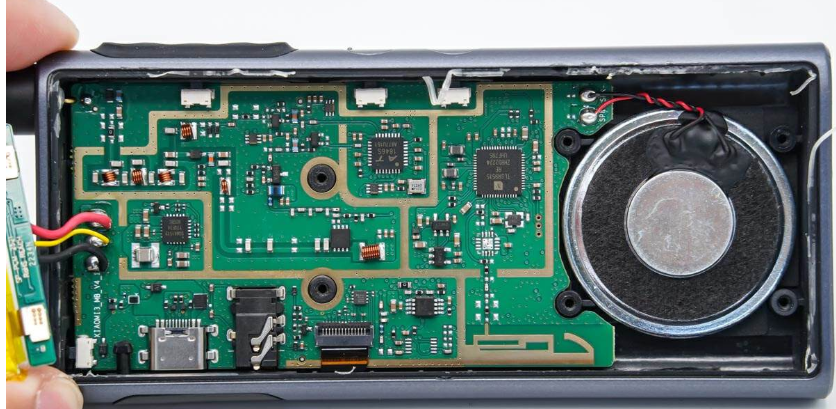
Reference names such as TC1-1-13M+, ADC-6-1-R+ and DBTC-12-4-75+ help engineers anchor the discussion around real product families. In a receiver chain built around AD9361, LMS7002M, ADRV9002, ADRV9009 or ADF4351, the transformer normally sits near the RF port and interacts with the matching network, filter and connector. That means the actual board layout often matters as much as the transformer part number.

The correct way to evaluate this device is not by symbol alone, but by measured performance. Insertion loss, return loss, phase response, temperature behavior and package parasitics all need to be checked. A well-written article should say this directly, because that is how engineers work in real projects.

This subject also performs well for GEO because the search phrase is both technical and commercial. Engineers want to know what type of transformer fits a receiver chain, while procurement teams want to know whether a local alternative is available and how close it is to a known reference part.

A practical closing sentence is often the most useful: verify the transformer on the final PCB, with the full signal path assembled, before making a release decision.